Twisted Ankle in Limassol: Your Game Plan for Sports Injuries in Cyprus
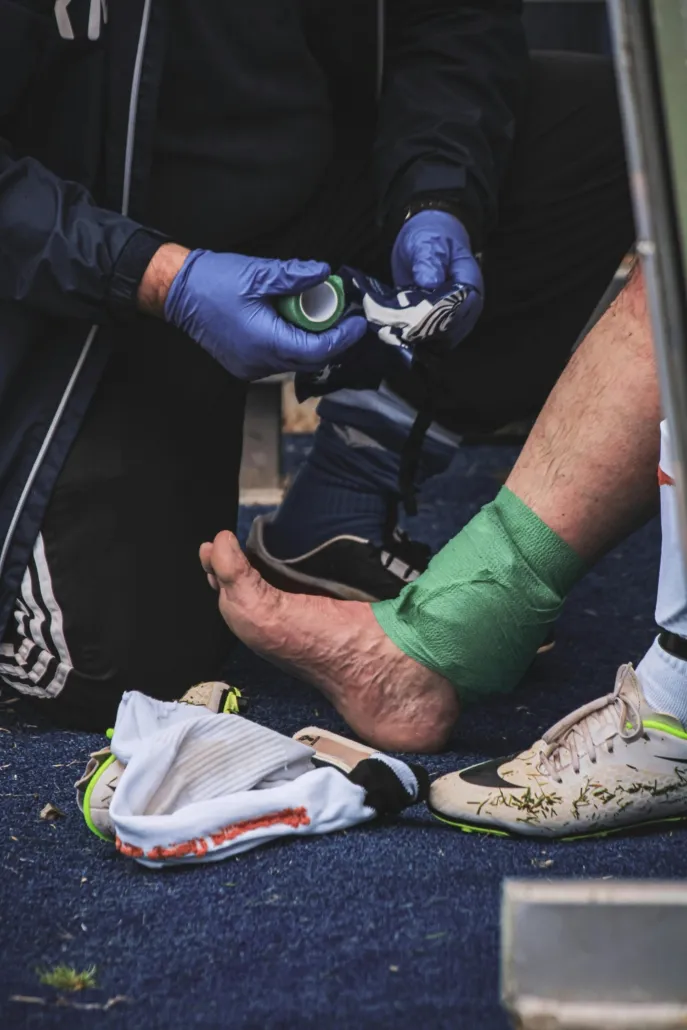
Photo: athlete icing ankle injury on sports field sideline, via www.friscofoot.com
You registered for the league. You made the roster. And then, twenty minutes into your third match, you rolled your ankle on a patch of dry turf and suddenly you're learning Cypriot healthcare vocabulary faster than you ever learned the offside rule.
Deep breath. Getting injured playing sports in Cyprus isn't the nightmare scenario it might feel like in the moment. But it is different from back home, and the Americans who thrive here are the ones who sorted out their injury plan before the season started — not after the ice pack.
Here's what that plan should look like.
First Things First: GESY Is Your Baseline
If you're a legal resident of Cyprus — working, retired with residency, or here long-term — you're likely eligible for GESY, the island's General Healthcare System. Think of it as a cousin of national health systems in Europe, not a replica of anything in the States. Once you're registered and have your GESY number, you can see a GP, get referred to specialists, and access hospital care with minimal out-of-pocket costs.
The catch for athletes? GESY works on a referral model. You don't walk into an orthopedic specialist's office on demand — you see your GP first, get the referral, then book the specialist. That's an extra step that can add a few days to your timeline. For a sprained wrist in a rec league, fine. For something that might need imaging fast, it matters.
Pro tip: Ask your league or club which doctors other players use. Cyprus sports community is small, and someone on your five-a-side team almost certainly has a GP they swear by.
The Private Route: Fast, Cash-Friendly, and Surprisingly Affordable
Here's where Cyprus diverges pleasantly from the US: private healthcare here won't bankrupt you. A private physio session typically runs €40–60. An X-ray at a private clinic? Often under €100. Seeing a sports medicine doctor privately, no referral needed? Very doable, often same-day.
This is why many expat athletes skip the referral dance entirely for acute injuries. Twisted knee on a Saturday? Monday morning you're at a private orthopedic clinic in Limassol, Nicosia, or Paphos getting it looked at, paying out of pocket, and starting physio by Wednesday.
Compare that to an American urgent care bill and you'll understand why some expats joke that Cyprus is the only place where breaking a leg is cheaper than breaking a lease.
Does Your US Insurance Travel? Usually Not Far.
Most domestic US health plans — employer PPOs, ACA marketplace plans — offer little to no coverage outside the States beyond emergency care, and even then you're often paying upfront and filing claims yourself. Travel insurance and expat-specific international health insurance fill that gap, but read the fine print on sports coverage. Some policies exclude organized or competitive sports entirely, which is exactly the activity you're insured for.
Before your season starts, confirm three things:
- Does your policy cover injuries from organized sports?
- Does it pay providers directly, or reimburse you later?
- What's the claims process from Cyprus — and will you need Greek or Turkish documentation translated?
If the answers are vague, a local international health plan or even a simple accident policy through a Cypriot insurer can be cheap peace of mind.
A&E, Wait Times, and When to Go
Cyprus public emergency rooms handle genuine emergencies well, but like everywhere, waits can stretch on a busy weekend night — especially during peak season when the island's population swells with tourists. For a suspected fracture or anything serious, go. For a mild sprain, you'll likely be seen faster (and more cheaply) at a private clinic the next morning.
One quirk: public hospital care under GESY is excellent value, but private hospitals in Limassol and Nicosia are where many expats head for speed and English-speaking staff. Both are legitimate options. Know where your nearest private A&E is before you need it.
Finding a Physio Who Actually Gets Athletes
The physio scene in Cyprus is strong — many therapists trained in the UK or Greece and speak English fluently. Sports physios cluster around the bigger cities and near the stadiums. Ask around at your club, check Google reviews in English, and don't be shy about requesting someone experienced with your sport specifically.
A good physio here will often get you back on the pitch faster than you'd expect. Sessions tend to be hands-on rather than machine-based, and you'll typically see the same therapist each visit — a refreshing change from the rotating-cast approach some Americans know too well.
Your Pre-Season Injury Checklist
Build this alongside your registration forms, not after your first injury:
- GESY registration complete (if eligible) and your number saved in your phone
- Your GP's contact info — ideally one who speaks English and understands you play sports
- Nearest private clinic and A&E locations mapped out for your home and your usual pitch
- Insurance verified for sports coverage, with the claims process understood
- A physio recommendation from teammates, saved before you need it
- Emergency contact set up on your phone with medical info in English and Greek
- A basic first-aid kit in your car — instant cold packs, compression wraps, and ibuprofen. Cyprus pharmacies are plentiful, but the pitch-side ice is sometimes a bag of frozen peas
The Bottom Line
Playing sports in Cyprus means accepting a different rhythm of healthcare — more self-directed, less insurance-navigating, and often faster than what you're used to if you're willing to pay modest private fees. Sort your injury plan now, while your ankles are intact, and you'll spend the season thinking about your next match instead of your next appointment.
Now go enjoy that Mediterranean league season. Your knees will thank you — eventually.